
Reviews
Route Planner Parking Challenge offers a satisfying blend of logic and precision. The core mechanic of drawing a single path is simple to grasp but provides plenty of depth as obstacles become more complex. The gradual difficulty curve keeps you engaged without causing frustration. Its bright, uncluttered visuals make it easy to focus on the puzzle at hand. This is a well-crafted brain teaser that respects your time and intelligence.
About this game
The Core Idea
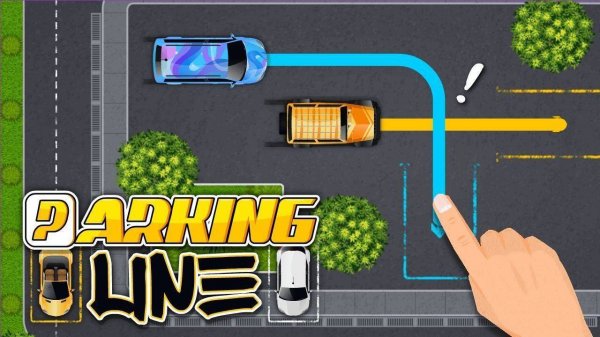
Route Planner Parking Challenge transforms a routine driving task into a series of logic puzzles. On each screen, a car and a parking spot are separated by obstacles like barriers or other cars. Your job is to draw a single, unbroken line on the screen. Once you lift your finger or release the mouse, the car follows that exact path. If the line is correct, the car glides smoothly into the space. If not, you get to try again. The game rewards careful thought over speed, making it a relaxing but stimulating experience.
Level Design and Progression
The puzzles start with simple layouts where the car and spot are close together with few obstacles. As you advance, the paths become more complex. Walls create winding corridors, and other parked cars force you to plan tighter curves. The difficulty increases gradually, so you always feel challenged but never overwhelmed. Each new stage feels fresh because the arrangement of elements changes completely. There is no repetition of the same puzzle twice.
Visual Style and Atmosphere
The graphics use bright, clean colors and simple shapes. The car is easy to see, and the parking spot is clearly marked. Obstacles are distinct and do not blend into the background. This clarity helps you focus on planning your route without visual confusion. The overall look is friendly and inviting, suitable for players of all ages. The calm color palette and straightforward design contribute to a stress-free puzzle experience.
Skills Developed Through Play
Playing this game regularly can improve your spatial reasoning and planning abilities. You learn to visualize a path before drawing it, considering angles and distances. Each puzzle requires you to think several steps ahead, much like a game of chess but with a single move. The process of analyzing a layout, forming a plan, and executing it precisely is satisfying. Over time, you become better at predicting how a line will curve around obstacles.
Approaching Each Puzzle
Before drawing anything, take a moment to study the layout. Look at where the car starts and where it needs to go. Notice the shape and position of every obstacle. Imagine a possible route in your mind. Then draw the line with steady, deliberate motion. If your first attempt fails, observe where the car went wrong. Use that information to adjust your plan for the next try. This trial-and-error process is part of the learning curve and makes each success feel earned.


Comments
Sign in to leave a review
No account? Create one
No comments yet.