
Reviews
Peak Glide Explorer succeeds as a straightforward reflex challenge with a satisfying learning curve. The obstacle patterns feel fair, and the boost items introduce meaningful decisions without overcomplicating the core loop. Visual clarity helps players read upcoming hazards quickly, and the sound design provides useful audio cues. While the game lacks narrative or progression systems, its pick-up-and-play nature makes it ideal for short sessions. The local high-score tracking adds replay value for competitive players.
About this game
Core Flight Mechanics
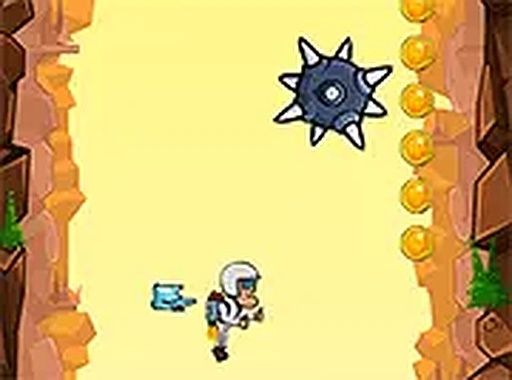
Players control an explorer using a personal lift device, moving vertically through rocky canyons. The primary action involves tapping or clicking to adjust altitude, steering through gaps between stone formations. Orbs scattered along the route grant points and temporary energy surges that extend flight duration. The challenge lies in maintaining a steady path while reacting to sudden obstacles.
Obstacle Patterns & Timing
Hazards appear in predictable sequences but increase in frequency as the run progresses. Some obstacles slide sideways, while others drop straight down. Learning to recognize these patterns helps players plan their ascent. The game rewards those who can anticipate rather than just react, making each attempt a lesson in spatial awareness.
Power-Up Integration
Special rocket-shaped items provide short bursts of upward momentum, allowing players to clear dangerous sections quickly. However, using a boost at the wrong moment can lead to collisions. Deciding when to activate these enhancements adds a strategic layer to the otherwise reflex-driven gameplay.
Visual & Audio Atmosphere
The environment features layered cliff faces with subtle color shifts that indicate depth. Sound effects include the hum of the lift device and a chime when collecting orbs. The minimalist design keeps focus on the action without visual clutter, suitable for extended play sessions.



Comments
Sign in to leave a review
No account? Create one
No comments yet.